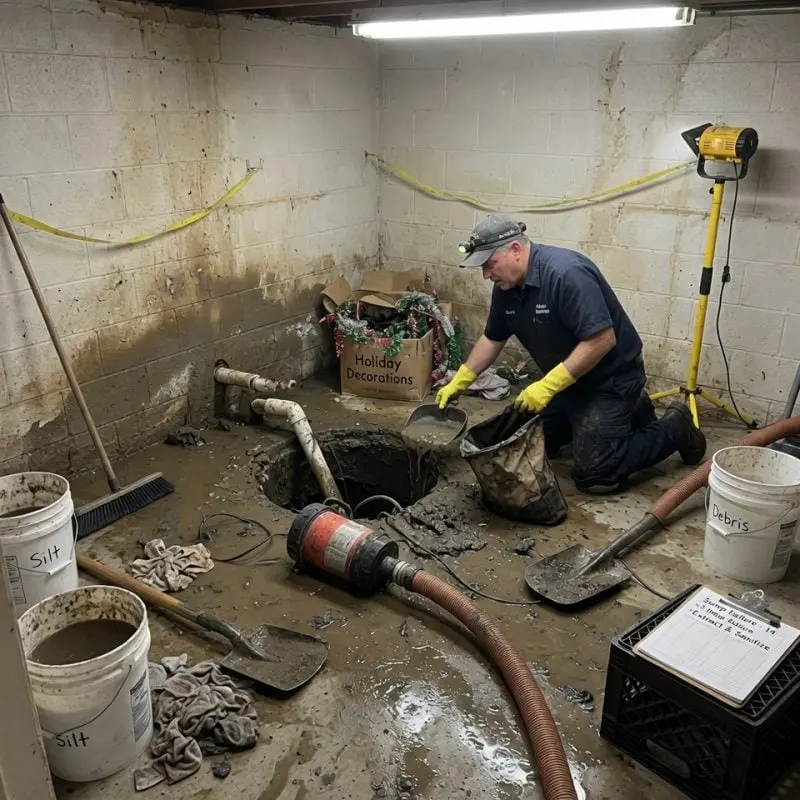
When sewage backs up in Fountain, a second question arrives right behind the first one: who pays for the cleanup. Fountain Sanitation District, which provides wastewater service in the city, has a policy on backups, and its terms are narrow. Knowing that policy before the work starts keeps a sewage backup from turning into a long dispute.
Key takeaways
- Fountain Sanitation District, created in 1955, provides wastewater service in Fountain, while City of Fountain Utilities provides water.
- Under district policy, claims for sanitary sewer and drain backups are denied unless the district's negligence is proven.
- The district does not provide or arrange cleaning after a backup in an independent service pipe.
- The district warns that basic homeowners insurance may not cover a sewer backup.
- Sewage is Category 3 water, so cleanup starts right away, with porous materials removed and the structure dried by controlled airflow and not added heat.
Who handles sewer and water in Fountain
Fountain Sanitation District provides wastewater service in Fountain and was created in 1955. Water is a separate service: City of Fountain Utilities, established in 1919, provides water and electric service within the city limits.
A sewage backup and a burst water pipe are different problems with different offices behind them.
What the district's backup policy says
In plain words, the policy has three parts that matter after a backup.
- Claims: claims arising from sanitary sewer and drain backups are denied unless the district's negligence is proven.
- Independent service pipes: the district does not provide or arrange cleaning services after a backup in an independent service pipe.
- The district's own main sewer system: if a backup is caused there, the district will pay up to a set maximum for immediate extraction and damage mitigation cleanup, on signed authorization, and it says this is not an admission of liability.
What that means in practice
None of this promises payment. The safe assumption is that the district will not pay, and anything it does pay is limited to immediate extraction and mitigation.
A property owner who is asked to sign an authorization should read it first and keep a copy.
Why the cause of the backup matters
The policy treats a backup differently depending on where it started. A blockage or break in the pipe that serves one building is a different case from a failure in the district's main sewer system in the street.
A plumber with a drain camera can show where the problem sits. Ask for the footage and a written finding, because that record is what decides which part of the policy applies.
The cleanup should not wait for the answer. Fountain Sanitation District says sewage and flood waters contain bacteria and other hazardous microorganisms, so the affected area needs attention right away.
Insurance and the district's warning
The district warns that basic homeowners insurance may not cover a sewer backup. Sewer or water backup coverage is often an optional add on, so the policy wording and any limit decide what is covered.
Call the insurer early and ask about backup coverage by name. Do not delay the cleanup while waiting for an answer, since delay lets the damage spread.
- Photographs of every affected room and the drain that backed up.
- A list of damaged belongings with rough ages and values.
- The plumber's finding in writing, with the camera footage.
- The restoration team's moisture readings and drying logs.
- A copy of any authorization signed for the district.
- Receipts for every emergency step.
Warning signs and first steps when sewage comes up
A backup rarely arrives without hints, and catching them early can limit the damage.
Warning signs
The signs below look the same whether the cause sits in the building's pipe or in the district's main sewer system, so they call for a plumber and not a guess.
- More than one fixture draining slowly at once.
- Gurgling from a drain or a toilet when another fixture runs.
- A sewer smell near a floor drain, a tub or the lowest level.
- Water rising in a tub or shower when a toilet is flushed or the washer drains.
- A floor drain that bubbles or weeps after heavy water use.
First steps
The first steps protect people and keep the backup from growing, and water extraction in Fountain can begin once the area is safe to enter.
- Stop using water: every drain in the house feeds the same pipe.
- Keep people out: children and pets stay away from the room, and nobody walks through the water.
- Skip the vacuum: a household vacuum spreads sewage.
- Protect belongings: lift dry items off the floor and away from the wet area.
- Photograph: record the damage before cleanup begins.
- Call a plumber and a restoration team: the plumber finds the cause, and the team starts the cleanup.
How the cleanup and drying work
Sewage is Category 3 water the moment it backs up. Crews wear protective gear, set up containment and run HEPA air scrubbers while porous materials such as carpet, pad, wet drywall and insulation are removed.
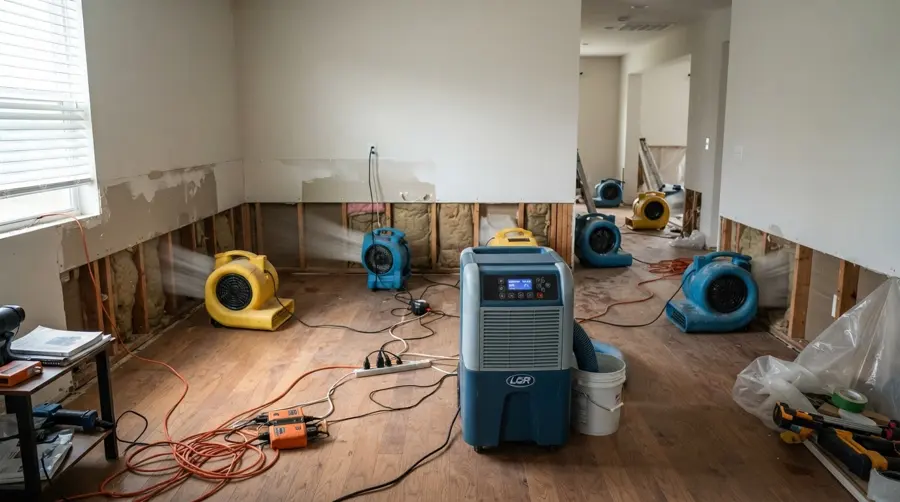
Hard surfaces and framing are cleaned and treated with an EPA registered antimicrobial. Structural drying follows, with air movers and LGR dehumidifiers running until readings match a dry reference.
The district says successful restoration depends largely on how fast the building and belongings are dried, and it advises against using heat to dry closed building interiors. Controlled airflow and dehumidification, guided by moisture readings, do the job without added heat.
- Removed: carpet, pad, wet drywall and insulation the sewage touched.
- Cleaned and treated: hard surfaces, framing and the drain area.
- Dried: the structure, with readings logged until it reaches the dry reference.
Rentals, landlords and multi unit buildings
Of 10,454 occupied homes in Fountain, 7,612 are owner occupied and 2,842 are renter occupied, and about 1,445 housing units sit in buildings of two or more units.
A renter who sees sewage tells the landlord or property manager at once, in writing, with photographs, and keeps a copy. In a multi unit building a backup can reach neighboring units through shared drains, so each affected unit is checked, and a water damage restoration team in Fountain documents each one separately.
Questions
Will Fountain Sanitation District pay for a sewage backup cleanup?
Not as a rule. The district says claims from sanitary sewer and drain backups are denied unless its negligence is proven. If a backup is caused within its main sewer system, it will pay up to a set maximum for immediate extraction and mitigation on signed authorization, and it says that is not an admission of liability.
Who cleans up after a backup in a private service pipe?
The district says it does not provide or arrange cleaning services after a backup in an independent service pipe, so the property owner arranges the work.
Does homeowners insurance cover a sewer backup?
The district warns that basic homeowners insurance may not cover it. Sewer or water backup coverage is often an optional add on, so the policy wording and any limit decide.
Why not use heaters to dry the house faster?
The district advises against using heat to dry closed building interiors. Crews dry with air movers and dehumidifiers and follow moisture readings instead.
Does the cleanup have to wait until the cause is known?
No. Sewage water contains bacteria and other hazardous microorganisms, according to the district, so the cleanup begins while the plumber finds the cause.