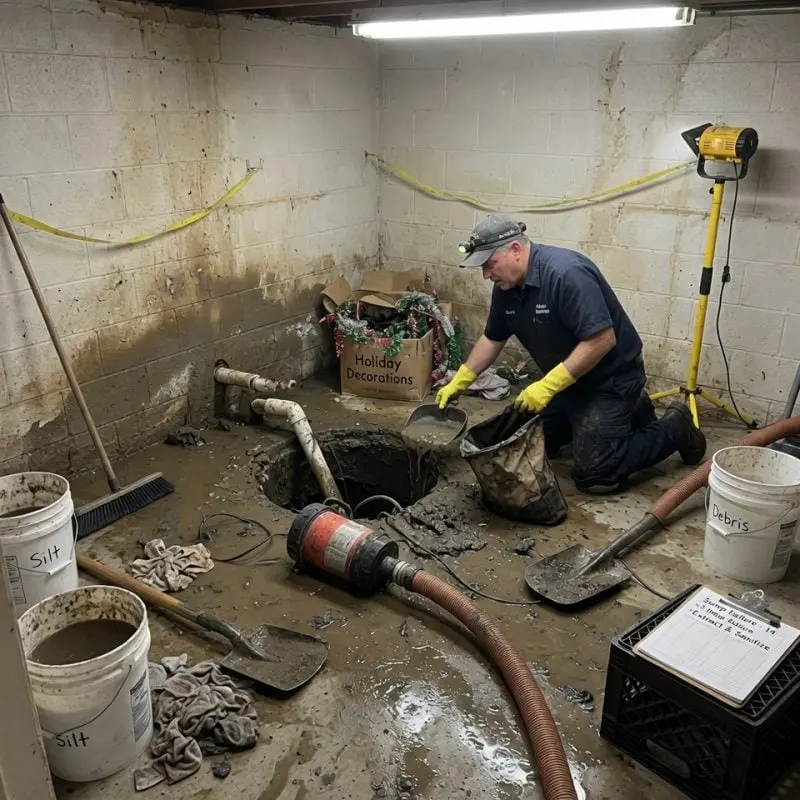
When sewage comes up through a floor drain or a toilet in Pueblo, the first practical question is which pipe failed. The City of Pueblo runs the wastewater collection system, while the owner owns and maintains the sewer service pipe and the tap under Pueblo Municipal Code 16-3-8. The cleanup of a sewage backup cannot wait for that question to be settled.
Key takeaways
- The City of Pueblo runs the wastewater collection system, and under Pueblo Municipal Code 16-3-8 the owner owns and maintains the sewer service pipe and the tap.
- A plumber's drain camera shows where the failure sits, and the recording is worth keeping.
- Cast iron and clay sewer service pipes are among Pueblo's plumbing failure points, and the median home dates from around 1965.
- Sewage is Category 3 water the moment it backs up, so porous materials it touched are removed and the structure is dried.
- Sewer backup coverage is often an optional add on to a homeowners policy, so the wording should be read before work starts.
Two pipes, two responsibilities
The City of Pueblo runs the wastewater collection system, which includes the mains that carry sewage away from each street.
The owner holds the other half. Under Pueblo Municipal Code 16-3-8, the owner owns and maintains the sewer service pipe, which runs from the building to the main, and the tap where it joins.
A backup can start in either place. That is why the first fact to establish is where the blockage or break sits.
Finding the failure
A plumber with a drain camera can show roots, scale, cracks, an offset joint or a blockage, and exactly where it sits. Ask for the footage and a written finding, because that record shows which side of the tap the problem is on.
These questions give the plumber's visit a clear purpose:
- Where does the problem sit, in the sewer service pipe, the tap or the main in the street?
- What is the pipe made of, and what shape is it in?
- Does it need clearing, a repair or a replacement?
- Can the camera recording be saved and sent to the insurer?
Why older Pueblo homes deserve a closer look at the pipe
The median home in Pueblo was built around 1965, and roughly one home in five is older than that by decades. Victorian and Craftsman homes sit on the Northside, Mesa Junction has homes from the late 1800s to the 1960s, and older worker cottages stand in Bessemer, Eilers and the Grove near the steel mill.
Cast iron and clay sewer service pipes are among the plumbing failure points in Pueblo. Both are older materials, and a pipe laid decades ago has had decades to scale, crack or fill with roots.
- Roots: enter at the joints of older clay pipe and slow the flow until a blockage forms.
- Scale: builds up inside cast iron until the opening narrows.
- Cracks and offsets: pipe sections can crack or separate with age, letting soil and roots in.
- Repeat backups: a drain that clogs again soon after clearing often points to damage and not a one time blockage.
Early signs that a sewer pipe is struggling
A full backup is usually preceded by smaller signs. They look alike whether the trouble is in the owner's pipe or in the main in the street, so they are a reason to call a plumber and not a diagnosis.
- Two or more drains running slow at once, such as a tub and a sink on the same floor.
- A toilet that bubbles or burps when the washing machine empties.
- A damp, foul smelling patch of ground along the path of the pipe in the yard.
- A sewage smell from a floor drain or the lowest bathroom.
- Blockages that come back after every clearing.
First steps when sewage reaches the floor
The first steps protect people and stop the spread. Water extraction can begin as soon as the room is safe.
- Stop the water: stop flushing and stop running taps and the washer, because every fixture drains into the same pipe.
- Close the room: shut the door on the wet room, and keep children, pets and bare feet out.
- No shortcuts: do not mop, squeegee or vacuum sewage into other rooms.
- Lift dry items: carry unaffected furniture, boxes and rugs out of the splash zone.
- Take pictures: capture the drain, the water mark on the walls and every damaged item before anything changes.
- Make two calls: a plumber to find the cause, and a restoration team to start the cleanup.
What the cleanup involves
Sewage counts as Category 3 water from the instant it backs up, whatever pipe it came from. The team suits up, seals the affected rooms with plastic containment and keeps clean areas clean.
Anything porous that the water reached is cut out and discarded: carpet, pad, wet drywall, baseboard and insulation. What stays, such as concrete, tile and framing, is cleaned and treated with an EPA registered antimicrobial while HEPA air scrubbers filter the air.
Structural drying comes last. Air movers and LGR dehumidifiers run until moisture readings reach the dry reference, and where the lowest drain sits in a basement the work overlaps with basement flooding cleanup.
Records, insurance and rentals
Whether a policy pays for a backup depends on its wording, and many homeowners policies treat sewer backup as an optional extra with its own limit. The insurer should hear about the loss early, but the cleanup should not stop to wait for a reply.
A tenant reports the backup to the landlord or manager in writing, with photographs, and keeps a copy. The property owner is the one who owns and maintains the sewer service pipe under the city code.
- The plumber's camera recording and written finding.
- Dated photographs of each room before cleanup.
- An inventory of ruined belongings.
- Moisture logs from the drying crew.
- Invoices for the plumber, the cleanup and any hotel stay.
Questions
Who is responsible for a sewer backup in Pueblo?
The City of Pueblo runs the wastewater collection system. Under Pueblo Municipal Code 16-3-8 the owner owns and maintains the sewer service pipe and the tap. A plumber's camera inspection shows which side the problem is on.
Is sewage backup covered by homeowners insurance?
Often not under a basic policy. Sewer backup coverage is commonly an optional extra, so the policy wording and any limit decide. Ask the insurer before work starts, and keep photographs and receipts.
Can sewage water be dried instead of removed?
Not the porous materials. Carpet, pad and drywall that sewage touched are removed, while hard surfaces and framing are cleaned and dried.
How can a blockage be told from a broken pipe?
A drain camera shows roots, scale, cracks or an offset joint and where they sit. A drain that backs up again soon after being cleared usually points to damage in the pipe.
Does an older home change the risk?
It can. Cast iron and clay are older sewer pipe materials and are among the failure points in Pueblo, and a pipe that has been in the ground for decades has had more time to scale, crack or fill with roots.