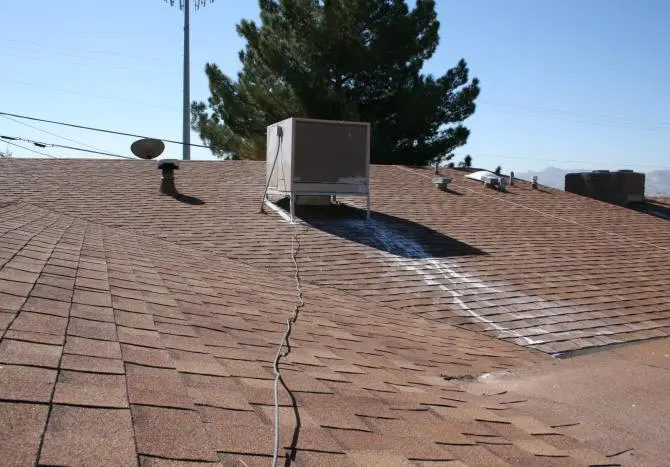
A swamp cooler is a small plumbing system set on a roof or in a window, and its water can end up in the ceiling as easily as in the pan. Roof mounted and window evaporative coolers are part of Pueblo's water damage picture, and a stuck float valve or a split supply pipe can soak insulation and drywall before a drip is ever seen. A wet ceiling under a cooler is a ceiling leak water damage job as well as a cooler repair.
Key takeaways
- A swamp cooler is a plumbing fixture with a float valve, pan, pump and supply pipe, and any of them can send water into the roof curb, the duct and the ceiling.
- A leak that continues with the cooler switched off points to the supply pipe or a stuck float valve.
- Attic insulation soaks up the water first, so a stain on the ceiling often means wet insulation above it.
- Close the supply valve to the cooler first, then photograph the damage and call for water extraction.
- Shutting a cooler down at the end of the season and checking it at start up catches most failures before they reach the ceiling.
How a swamp cooler holds and moves water
An evaporative cooler, usually called a swamp cooler, cools air by pulling it through wet pads. A small pump lifts water from a pan to the pads, and a float valve, which works like the one in a toilet tank, tops the pan up as water evaporates.
Pueblo is semi arid and gets about 13 inches of precipitation a year, which is why evaporative cooling suits the climate. The same design makes a cooler a plumbing fixture as well as an appliance, with a supply pipe, a valve, a pan and a pump that can each fail.
- Float valve: sticks open or fails to close, so the pan keeps filling and spills over the rim.
- Pan: rusts through or cracks at a seam and drips onto the roof curb or the floor below.
- Supply pipe and fittings: a split or loose fitting leaks even when the cooler is off.
- Overflow and drain: a blocked overflow sends extra water over the edge instead of away.
Where the water goes from a roof mounted cooler
A roof mounted cooler sits on a curb, a raised frame on the roof, with a duct dropping through the ceiling into the house. Water that escapes the pan or the pipe can run down that duct opening, along the framing and into the ceiling below.
Attic insulation soaks up the first of it, then the drywall takes over. Brown rings, a sagging ceiling or a drip at the supply vent are the usual signs.
Roof curb and duct drop
Water that gets past the curb can follow the duct opening into the ceiling around the vent. The leak shows in one spot, usually near the grille, and spreads outward as the drywall wicks it up.
Not every stain here is the cooler's fault. A curb that was never sealed well can also admit rain, which is a roof leak problem, so the cause has to be sorted out before the repair.
Window units
A window cooler drains toward the wall and the floor beneath it. The sill, the wall under the window and the carpet are the first places to check.
Signs of a cooler leak before the ceiling fails
A cooler leak is easy to miss until a stain appears, because the water collects in insulation first.
How the leak behaves points toward the cause. A leak that continues with the cooler switched off points to the supply pipe or a stuck float valve, because both keep passing water without the pump, while a leak that appears only when the cooler runs points to the pan, the pads or the overflow.
These signs show up before the ceiling fails:
- A brown stain or ring on the ceiling near the cooler duct or vent.
- A drip, or the sound of running water, at the vent while the cooler is off.
- A pan that never stops filling, or water streaking the roof below the cooler.
- Damp or flattened insulation around the duct drop in the attic.
- White mineral crust on the pan, the pads or the fittings.
- A musty smell near the vent after the cooler has been running.
First steps when water shows
The goal is to stop new water and keep the damage from spreading while the cause is found, and water extraction does not need to wait for the repair.
- Shut the water supply to the cooler at its valve, then switch the cooler off.
- Move furniture, rugs and electronics out from under the stain, and set out buckets.
- Treat a bulging ceiling as a hazard, since it can drop with a lot of water behind it, and keep the power off to any light fixture the water is reaching.
- Photograph the stain, the cooler, the pan and the roof curb before anything is moved or repaired.
- Call a plumber or HVAC technician for the cooler and a restoration team for the water.
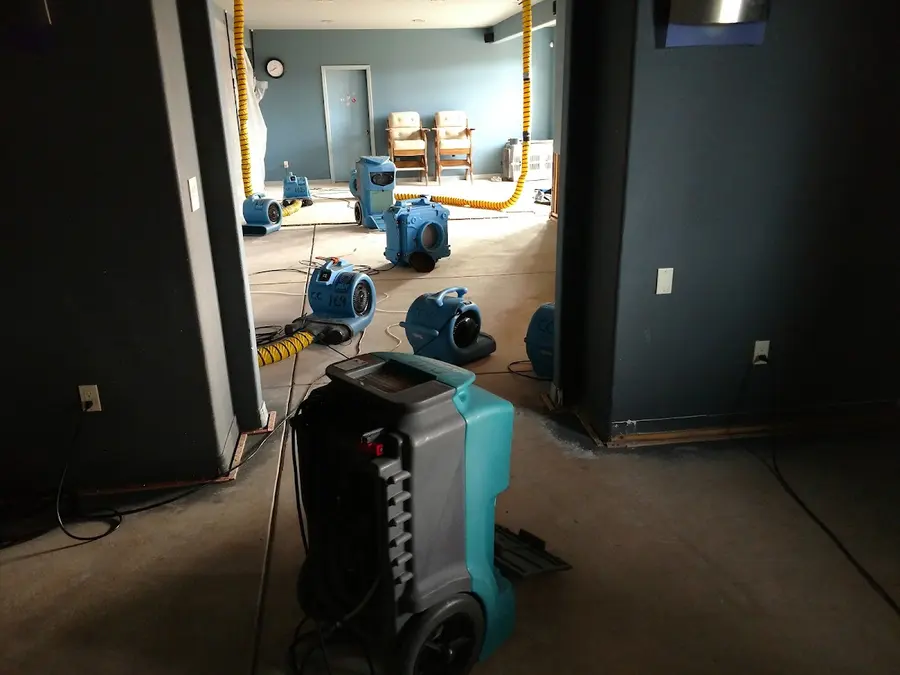
What drying involves after a cooler leak
Water from a cooler pan has circulated over pads and sat in a pan, so it can carry dust, minerals and bacteria. That is why the crew judges the water category on site and does not assume the water is clean.
The team finds the wet area with a moisture meter and a thermal camera, then removes what cannot be dried. The opened ceiling and the attic are dried with air movers and dehumidifiers until readings match a dry reference, following the IICRC S500 standard.
Mold can begin to grow in wet drywall and insulation within 24 to 48 hours, so drying starts early and the readings are logged each day. Those logs also become part of the insurance file.
- Removed: saturated insulation, sagging or stained drywall and wet carpet under the stain.
- Dried in place: damp but sound drywall, framing and the attic deck.
- Checked: the duct drop, the roof curb and the wall cavities near the vent.
Shutting down and starting up a cooler
Most cooler leaks begin at the edges of the season, when a unit is shut down for winter or started up again. A short routine at each end catches the parts that fail.
- At shutdown: close the supply valve, drain the pan and the pipe, and cover the unit.
- At start up: check the pads, the float valve, the pan and every fitting for rust, scale or drips before the first long run.
- During the season: look at the ceiling near the vent, and at the roof below a roof mounted cooler, now and then, since a slow leak shows there first.
If the ceiling is already wet
A cooler that has already leaked into a ceiling needs swamp cooler leak water damage work for the wet materials, while a plumber or HVAC technician repairs the cooler itself. Acting before the stain spreads keeps more of the ceiling intact.
Questions
Does homeowners insurance cover a swamp cooler leak?
It depends on the policy and the cause. Many policies cover sudden water damage, while a slow leak that went on for a long time is often treated differently. Photograph the damage before repairs and ask the insurer how the claim works.
Can a swamp cooler leak when it is turned off?
Yes. A stuck float valve or a split supply pipe can keep passing water with the pump off, which is why the first step is closing the supply valve to the cooler.
How can a cooler leak be told from a roof leak?
A cooler leak usually stains the ceiling near the duct or vent and keeps growing in dry weather, while a roof leak tends to show up after rain. A stain that spreads on a dry day points to the cooler.
Does a wet ceiling always have to be cut open?
No. Drywall that is only damp can often be dried in place, while saturated or sagging drywall and wet insulation are removed. Moisture readings decide.
Is cooler water clean water?
Not always. Water that has circulated over pads and sat in a pan can carry dust and bacteria, so the crew judges the category on site before choosing what to remove.