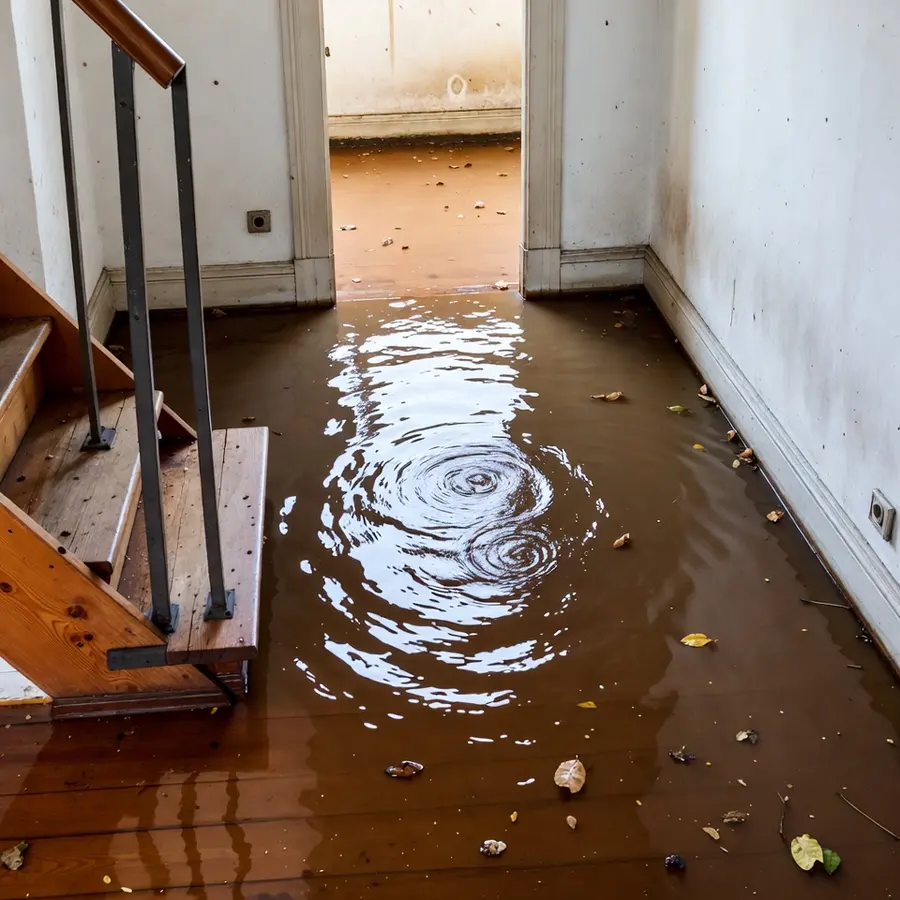
Cañon City's floods mostly come from short, intense storms and not from the Arkansas River overflowing, according to the city's stormwater newsletter. North Cañon City flooded along Central Avenue in 1995 and again in 1996 and 1997, and North Sand Creek, normally a dry creek bed, overflowed in July 2009. When that kind of runoff gets into a building, the job is storm and flash flood cleanup.
Key takeaways
- The city says local soils absorb little water, so creeks and ditches fill fast, and most recorded floods came from short, intense storms.
- North Cañon City flooded along Central Avenue in May 1995 and again in August 1996 and August 1997, and North Sand Creek overflowed in July 2009.
- Detention basins along the Hogbacks and a drainage channel announced for the Dawson Ranch area slow runoff, but the city still reports localized flooding.
- Flash flood water inside a building is Category 3 water, so silt is removed, porous materials come out and the structure is dried.
- Cañon City takes part in the National Flood Insurance Program, and the city says flooding often occurs outside mapped floodplains.
Why a short storm floods Cañon City
The city's stormwater newsletter says the area's sparse vegetation and soils that do not absorb much moisture let creeks and drainage ditches fill quickly with rushing water.
Most flood records the newsletter found came from short, intense local storms, not from the Arkansas River or Four Mile Creek overflowing. River floods come mostly from spring snowmelt, often with rain.
The city also says Cañon City periodically experiences localized flooding in areas bordered by the Arkansas River, often in areas that are not in mapped floodplains.
The storms the city has recorded
Short, intense storms in 1950, 1965, 1966 and 1967 flooded Central Avenue, downtown, South Cañon City and the Lincoln Park area. Later records are more specific.
- August 2, 1991: up to 3 inches of rain in 45 minutes washed away a section of South Street 15 feet wide and 50 feet long.
- May 17, 1995: 3.8 inches of rain in 12 hours flooded north Cañon City along Central Avenue.
- August 8, 1996: the same north Cañon City area flooded again.
- August 6, 1997: north Cañon City flooded again along Central and Orchard Avenues.
- July 25 and August 4, 2009: 4 to 6 inches of rain fell on July 25, followed by 1.42 inches on August 4. North Sand Creek, normally a dry creek bed on the west end of town, overflowed, as did most streets throughout town.
What the list shows
The same part of north Cañon City appears in 1995, 1996 and 1997, the 1991 rain fell in just 45 minutes, and in 2009 most streets overflowed and not only the low spots. The records describe rain falling in a short time, not the Arkansas River rising.
How the city drains its storm water
A January 2018 Daily Record report listed eight storm drainage basins: Abbey, Northeast Cañon, Orchard Avenue, South Sand Creek, North Ninth Street, Fourmile, North Sand Creek and Hogbacks.
Detention basins built along the Hogbacks west of North 5th Street, north of High Street and Central Avenue, and north of the Abbey slow flash flood runoff. A 2012 city newsletter also announced a drainage channel with drop structures in the Dawson Ranch area around Wild Rose Drive to send runoff to a detention basin.
These works slow runoff, and the city still describes localized flooding as something Cañon City periodically experiences. A drainage project does not promise a dry building at any one address.
What flash flood water does inside a building
Runoff carries soil, debris and whatever it picked up on the way, so it is treated as Category 3 water as soon as it is indoors. Whatever the lowest level of a building is, a garage, a utility room or a finished floor, that is where the water collects.
Garages and utility rooms often hold the water heater, the furnace and the electrical panel, so water there is a safety problem as well as a damage problem.
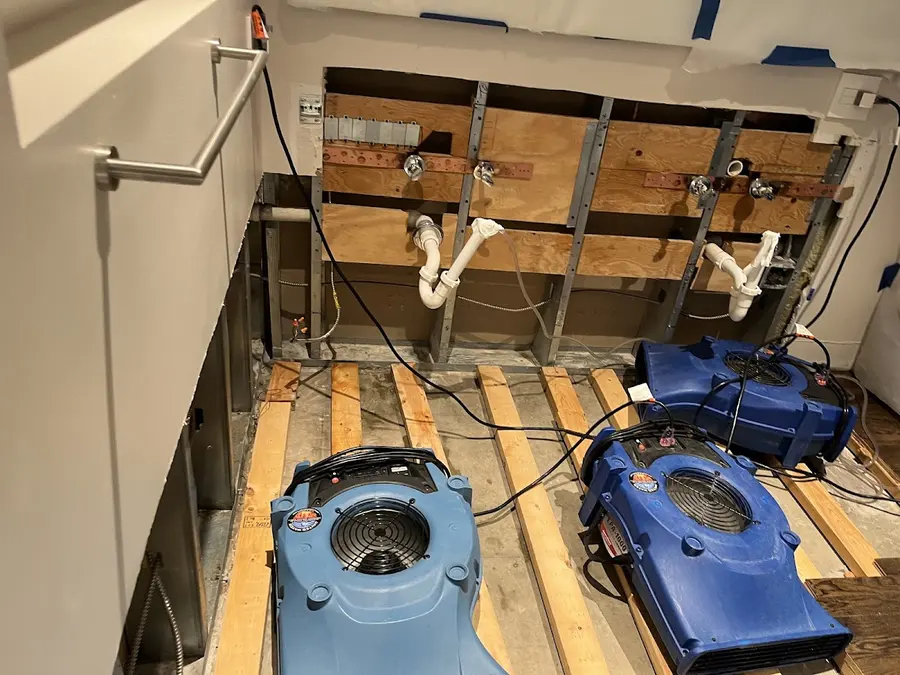
The cleanup follows a set order, and water extraction is the step that limits how far the water spreads. Where water reached a lower level, the work overlaps with basement flooding cleanup.
- Silt and mud first: shovels and squeegees clear the heavy material before any pumping.
- Water next: the extraction crew pumps out what stands on the floor.
- Porous materials out: carpet, pad, wet drywall and insulation are cut away.
- Cleaning: hard surfaces and framing are washed and treated with an EPA registered antimicrobial.
- Drying: air movers and LGR dehumidifiers run until readings reach a dry reference.
First steps when runoff enters
Runoff can rise and fall quickly, so safety comes first.
- Keep out of moving water and treat a flooded street as unsafe, since the August 1991 storm washed away part of South Street and moving water can hide damaged pavement.
- Leave electricity off in wet areas until an electrician has checked the outlets and the panel.
- Photograph the high water mark and the damage before cleanup starts.
- Lift belongings out of reach of the water when it is safe to do so.
- Keep children and pets away from the wet rooms.
- Call the insurer and a water damage restoration team in Cañon City, and note who was called and when.
Flood insurance, maps and mapped floodplains
Cañon City takes part in the National Flood Insurance Program, so property owners can buy flood insurance through it. The city's flood hazard map is based on FEMA's Flood Insurance Study for Fremont County dated July 3, 2012, as amended, and Chapter 21.10 of the city code covers floodplain management.
Because the city says localized flooding often occurs outside mapped floodplains, a map location alone does not say whether a property can flood. A standard homeowners policy generally excludes flood, so the policy wording and any waiting period for a flood policy matter before a storm and not after.
Preparing before the next cloudburst
A few checks made on a dry day cost little and make the next storm easier to handle.
- Keep gutters, downspouts and drains clear so roof water has somewhere to go.
- Look at how the lot drains, and note low spots, low doors and garage thresholds where water could collect.
- Keep valuables and papers off the floor in the lowest rooms.
- Know where the main water shutoff and the electrical panel are before water arrives.
- Photograph the property now, so a before record exists.
- Ask the insurer about flood coverage and any waiting period before the storm season.
Questions
Does Cañon City flood only along the Arkansas River?
No. The city says most flood records it found came from short, intense local storms, and that localized flooding often happens in areas outside mapped floodplains.
Which part of town flooded in 1995, 1996 and 1997?
North Cañon City along Central Avenue flooded in May 1995, in August 1996 and again in August 1997, when Orchard Avenue was also named.
What happened in July 2009?
Rain of 4 to 6 inches fell on July 25, followed by 1.42 inches on August 4. North Sand Creek, normally a dry creek bed on the west end of town, overflowed, as did most streets throughout town.
Does flood insurance cover water from a cloudburst?
Cañon City takes part in the National Flood Insurance Program, so flood insurance can be bought through it. A standard homeowners policy generally excludes flood, so the policy wording decides.
Can a flash flood happen outside a mapped floodplain?
Yes. The city says localized flooding often occurs in areas that are not in mapped floodplains.
What should move first when water is coming?
Papers, electronics, medications and keepsakes go up first, then small furniture. The main water shutoff and the electrical panel should be located before water arrives.