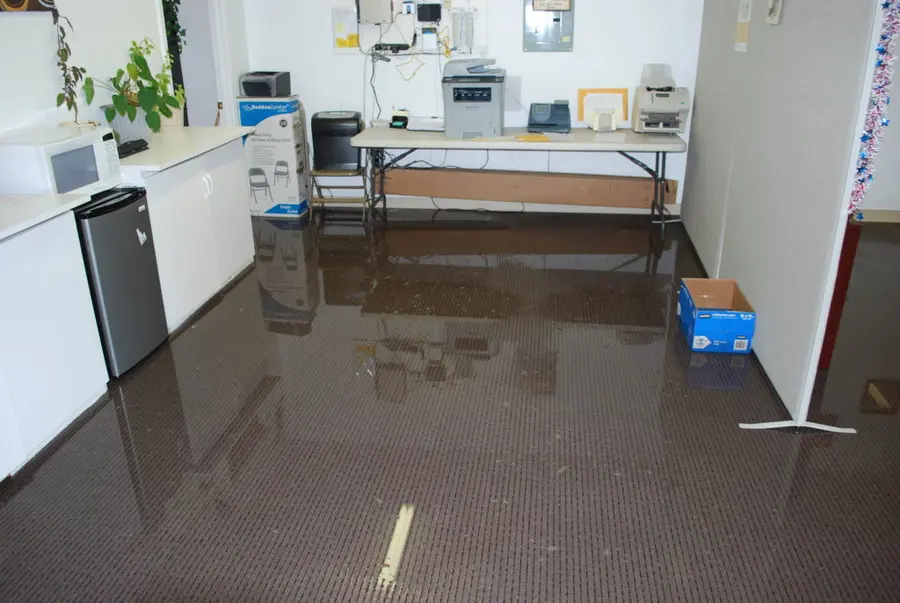
Downtown Florence is mostly built of brick and local stone, and that changes how water behaves once it gets in. A shop or restaurant owner on Main Street deals with dense walls that hold moisture, basements where water settles and stock that cannot sit wet. The first day of a commercial water loss sets how much of the building and its contents can be saved.
Key takeaways
- The Downtown Florence Historic District has 69 primary buildings, 55 of them contributing, centered on Main Street between Petroleum Avenue and Santa Fe Avenue.
- Most of the buildings are brick and local stone commercial blocks, and several have raised or full basements where water settles.
- Dense masonry dries slowly, so moisture readings decide when drying is done and not how a wall feels.
- Wood, paper and textile stock moves off wet floors first, and each item is photographed and listed before it moves.
- Phased drying lets a shop, gallery or restaurant keep part of the building open.
What the Main Street buildings are made of
The Downtown Florence Historic District has 69 primary buildings, 55 of them contributing, centered on Main Street between Petroleum Avenue and Santa Fe Avenue. It also takes in Front Street, Pikes Peak Avenue and Railroad Street.
Most of the buildings are brick and local stone, including sandstone and granite, in two and three story commercial blocks. Along Main Street the brick commercial buildings form a continuous street wall, mostly two stories tall and built in the 1890s boom.
Downtown grew in two waves, a first and largest building boom in the 1890s and a smaller one in the 1910s and 1920s, so the buildings carry more than one era of construction and repair.
Antique stores, galleries, breweries and restaurants fill those blocks, and the City's master plan work calls the concentration of antique businesses a valued and defining feature of downtown.
Dense materials such as brick and stone take up water slowly and give it back slowly, so a wall can feel dry on the surface while it is still wet inside.
Basements and low spaces
Several buildings in the historic district have raised or full basements. The Florence Pioneer Museum sits in a stone commercial building on Front Street that dates to 1894 and has a full basement.
Water settles at the lowest point, so a basement can hold a large share of a loss while the shop above looks fine. Water extraction comes first, before any drying equipment is set.
- Stock and fixtures stored low: moved to a dry space and listed before extraction starts.
- Mechanical and electrical equipment: checked for water before it is switched back on.
- Humidity: damp basement air can travel upward, so the floors above are monitored too.
Protecting antiques, art and stock
Antiques and gallery pieces react to water in different ways, and the order in which things move matters.
Humidity matters even where nothing got wet. Paper, canvas and wood pieces on upper floors can absorb moisture from damp air, so the crew monitors the whole building and not only the wet room.
- Wood and veneer: move off wet floors and walls at once, since wood swells and glue lets go as it stays damp.
- Paper, books and textiles: move to a dry, cool space, and do not stack wet paper.
- Metal and glass: dry and separate them, because rust can start on metal once it stays wet.
- Valuable or fragile pieces: ask a conservator before cleaning or drying them.
- Everything: photograph each item and note its position before it moves.
The first day for a shop or restaurant owner
The first day is about stopping the water, protecting people and stock, and starting the record.
- Stop the source: shut off the water to the broken fixture or to the whole building.
- Make it safe: keep power off in wet areas, and keep customers and staff out.
- Food service: food and ice that touched the water are discarded, and the kitchen is cleaned before reopening.
- Protect contents: lift stock off wet floors and cover what cannot move.
- Photograph and list: record the damage and the stock before cleanup begins.
- Call the insurer and a restoration team: extraction and moisture mapping start while the claim is opened.
Who to call first
A water damage restoration team in Florence can extract the water and map the wet areas while the owner reaches the insurer and the landlord, if the space is rented.
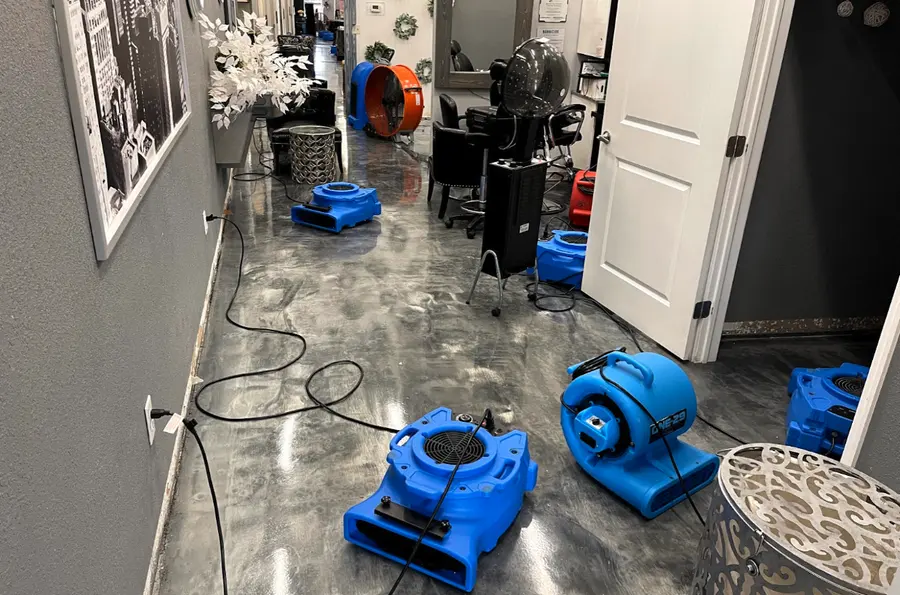
Drying brick and stone without closing the doors
Drying starts with a map. Moisture meters and thermal imaging show where the water traveled, including inside walls and under floors.
Structural drying then uses air movers and LGR dehumidifiers, set to the room, until readings match a dry reference under the IICRC S500 standard. Daily readings are logged, and the logs become part of the claim file.
Where buildings stand side by side in a continuous street wall, a wet wall can carry moisture toward a neighbor, so the crew checks both sides of any shared wall.
Old interior finishes and aged wood do not take well to blasting heat, since fast uneven drying can crack finishes and warp wood. Controlled airflow and dehumidification dry the building more evenly.
- Phase one: extraction and the wettest rooms, with the rest of the building left open where it is safe.
- Phase two: equipment moves as readings drop, which frees floor space for customers.
- Phase three: final readings, equipment removal and the finished drying log.
Flood maps, storm water and permits near downtown
The City says Florence is crisscrossed by floodplain from the Arkansas River and from creeks such as Coal Creek and Oak Creek. It regulates development in floodplains by ordinance and asks residents to contact the Planning Director before developing in one.
In September 2025 the City noted that FEMA is updating the floodplain maps, so a flood zone cannot be assumed for any address. A business owner planning repairs or a rebuild can ask the City whether a floodplain rule applies before work starts.
Plumbing and electrical permits come from the Colorado Department of Regulatory Agencies (DORA), not the City, while the City issues building permits.
Records, insurance and reopening
A good record makes the claim easier and the reopening faster. Insurers ask what was damaged, when and why, and the drying logs answer part of that.
- Photographs of every room, the basement and the stock before cleanup begins.
- An inventory of damaged stock, with purchase prices where they are known.
- The restoration team's moisture readings and drying logs.
- Receipts for emergency repairs, equipment and temporary storage.
- Policy wording on business interruption, which some commercial policies include and others do not.
Questions
Why do brick and stone buildings take longer to dry?
Dense masonry takes up water slowly and releases it slowly, so readings, not touch, show when a wall is dry.
Can a business stay open during drying?
Often in part. Drying is phased, with equipment placed in the wettest areas first and the rest of the building kept in use where it is safe.
What should move first off a wet floor?
Wood furniture, paper goods, textiles and anything stored in a basement, since those suffer damage fastest.
Does a business policy cover water damage?
It depends on the cause and the policy. A sudden leak is often covered, while flood water may need a separate flood policy. Photograph the loss, list the stock and ask the insurer before discarding anything.
Who issues plumbing permits for repairs in Florence?
The City issues building permits, but plumbing and electrical permits come from the Colorado Department of Regulatory Agencies (DORA), not the City.