Structural Drying in Florence, Colorado
Structural drying removes the moisture left in framing, floors and walls after the water is gone, and Florence crews measure it until every material reads dry.
(888) 532-8620Plan Florence drying with a crew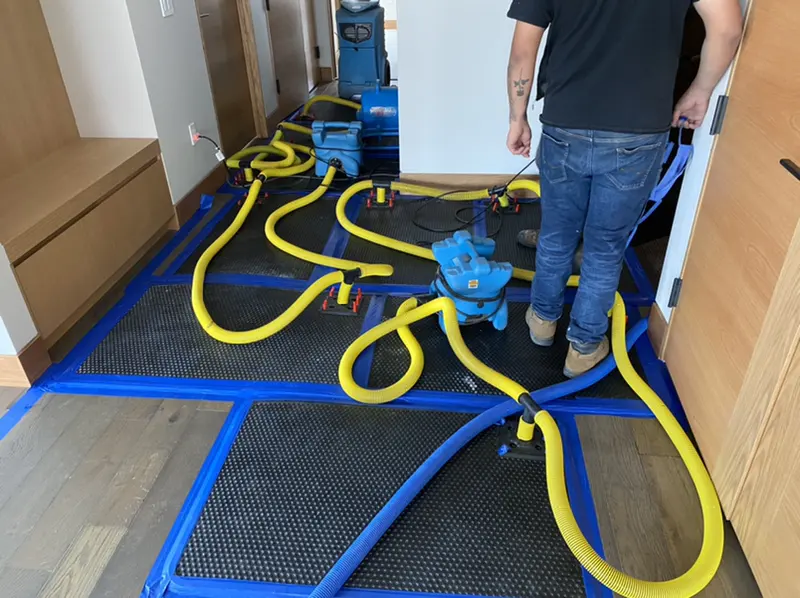
First steps for structural drying and dehumidification in Florence
- Get the water out first. Standing water is extracted before equipment is set, since fans and dehumidifiers work on moisture, not puddles.
- Keep the rooms closed. Closed rooms let dehumidifiers control the air, and open windows work against them.
- Leave the equipment running. Switching units off early stalls the drying and lets damp materials rewet, so the crew decides when to pull them.
- Document before cleanup. Photos of wet surfaces, the equipment layout and the first meter readings start a record that supports the claim.
How the restoration team approaches structural drying and dehumidification
Structural drying starts after the standing water is gone and ends when every wet material reads dry. In between, equipment and measurement do the work, because wood, plaster and masonry give up water slowly and unevenly.
What does structural drying and dehumidification cost in Florence, CO?
Structural drying in Florence runs $1,000 to $3,000 for one or two rooms, $3,000 to $7,500 for a basement or several rooms and $7,500 and up for hardwood, plaster or Class 4 drying.
One or two rooms
- Air movers and one dehumidifier
- Three to five days
- Daily readings
Basement or several rooms
- Several dehumidifiers
- Wall cavity drying
- Psychrometric logs
Hardwood, plaster or Class 4
- Desiccants or floor mats
- Longer equipment time
- Dense materials
Ranges are typical, not a quote: the category of water, square footage, material class and how fast drying started move the number most. Run the water damage cost calculator for a closer range.
How structural drying and dehumidification is handled in Florence
Moisture gets mapped before any equipment goes down, so the drying plan matches what is actually wet. Equipment stays until the readings say dry, not until it looks dry.
Measure and map
Moisture meters and a thermal imaging camera mark the wet materials and set the dry targets.
Place equipment
Air movers and dehumidifiers are matched to the class of loss and the size of the room.
Read and adjust
Readings are logged every day, and units are moved as the wet areas shrink.
Verify dry
Equipment comes out only when each material meets its dry standard.
Dry air in a dry climate
Florence sits in the semi-arid high desert, and NOAA normals for nearby Cañon City show about 13.72 inches of precipitation a year. Dry outdoor air helps, yet brick, stone, framing and concrete still hold water for days unless equipment moves it out.
Downtown buildings are mostly brick and local stone, and dense walls like those dry far more slowly than a stud wall with drywall.
What drying equipment does
- Air movers push dry air across wet surfaces to speed evaporation
- Dehumidifiers pull moisture out of the air so it can be removed
- Floor mats and desiccants draw water from hardwood and dense materials
- Meters and a thermal imaging camera track where moisture remains
The IICRC S500 standard sets the dry goal from reference readings in unaffected materials, so drying ends on a measured number, not on a guess.
Classes of water loss
Class 1 is a small loss in low-absorbing materials, Class 2 covers whole rooms of carpet and wet walls, Class 3 means water came from above and soaked ceilings and walls, and Class 4 covers dense materials such as hardwood, plaster and concrete.
Readings are taken every day, and equipment is moved or removed as materials reach their targets. Standing water comes out first through water extraction, and basements are covered under basement flooding cleanup.
Structural drying and dehumidification across Florence and nearby communities
Drying work covers ZIP 81226, from brick and stone buildings on Main Street and in the Downtown Florence Historic District to homes along Colorado Highway 115 and neighboring Rockvale.
The same service nearby: structural drying and dehumidification in Pueblo, Cañon City, Fountain.
Related to structural drying and dehumidification in Florence
Structural Drying and Dehumidification questions in Florence, CO
Still dealing with it?
Questions about equipment, readings or how long drying takes? Crews go over each one at any hour.
(888) 532-8620 Plan Florence drying with a crewWhat is structural drying?
It is the controlled removal of moisture from framing, floors and walls using air movers, dehumidifiers and daily meter readings after the standing water is gone.
How long does structural drying take?
A small loss often takes three to five days, while hardwood, plaster and dense masonry take longer. Readings against the dry standard decide when equipment leaves.
Why not just open the windows and run fans?
Open windows and household fans move air but do not remove moisture fast enough, and humid weather can add water back. Dehumidifiers control the conditions.
What is the IICRC S500 dry standard?
It is the industry procedure for water damage restoration, and it asks crews to compare readings in wet materials with readings in dry reference materials before equipment is removed.
Does dry Florence air make drying easier?
It helps, since outdoor air carries little moisture. Even so, brick, stone, framing and concrete hold water for days, so equipment and readings still drive the schedule.
How much does structural drying cost in Florence?
Cost follows the area, the class of loss and the materials involved. The cost calculator and the drying time estimator give starting figures.
Get measured drying for a Florence building
Moisture keeps working in walls and floors long after the surface looks dry, so crews work 24/7 to place equipment and log readings.
(888) 532-8620Start Florence structural drying